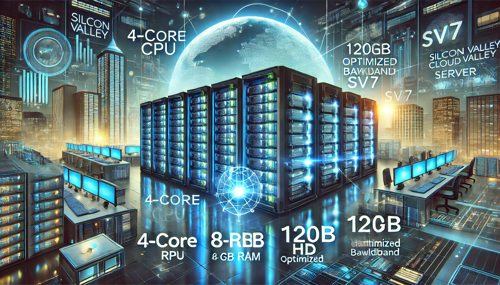
1. what is a blade server?
a blade server is a high-density server architecture that consists of multiple blades (or server modules) that are plugged into a chassis that provides power, cooling, and network connectivity. the design of blade servers allows data centers to achieve higher computing power and storage capabilities in limited space. compared with traditional tower or rack-mounted servers, blade servers provide better space utilization and more centralized management.
2. what are the application cases of blade servers in the united states?
in the united states, blade servers are widely used in various industries, especially in data centers and cloud computing service providers. for example, a well-known cloud service provider uses blade servers to support its large-scale virtualization platform, which can quickly deploy and expand computing resources. in addition, some financial institutions also use blade servers to process large amounts of transaction data to ensure efficient operations and fast response times. the medical industry is also gradually adopting blade servers to quickly store and process patient data.
3. what are the advantages of blade servers compared to other servers?
the advantages of blade servers are mainly reflected in the following aspects: first, space saving. since multiple blades can be concentrated in a single chassis, blade servers can provide more computing power in a limited space. the second is high energy efficiency. the design of blade servers makes cooling and power management more efficient, thereby reducing overall energy consumption. thirdly, blade servers perform well in terms of management convenience. the centralized management interface allows operation and maintenance personnel to monitor and maintain servers more conveniently. in addition, blade servers are highly scalable, and users can quickly increase or decrease the number of blades according to needs to adapt to business changes.
4. how can the specific application of blade servers in data centers improve efficiency?
in data centers, the application of blade servers can significantly improve efficiency. first, the virtualization capabilities of blade servers allow multiple virtual machines to run on the same blade, which can improve server resource utilization. secondly, the centralized management platform allows operation and maintenance personnel to monitor the status of all blades in real time to detect and solve problems in a timely manner. in addition, the modular design of blade servers makes it easier to replace and upgrade hardware, reducing equipment downtime, thereby improving the overall operational efficiency of the data center.
5. what issues should be paid attention to when using blade servers?
although blade servers have many advantages, there are still several issues that need to be paid attention to during use. first of all, the initial investment cost is high, and users need to make reasonable choices based on their own budget. secondly, blade servers have greater cooling and power requirements, and data centers need to ensure they have adequate cooling systems and power supplies. in addition, management complexity is also a factor that needs to be considered. although centralized management of blade servers is convenient, it also requires operation and maintenance personnel to have corresponding technical capabilities. finally, users also need to pay attention to compatibility issues. blade servers from different manufacturers may have compatibility issues in hardware and software, so be careful when choosing.
- Latest articles
- Malaysia Cn2 Access Guide Covers Line Selection, Bandwidth Configuration And Optimization Strategies In Detail
- Operation And Maintenance Manual What Are The Monitoring Alarms And Capacity Planning Recommendations For Singapore Cloud Storage Servers?
- How To Choose A Suitable American Game Server Host To Ensure Stable Gaming
- How To Establish Supply Chain And Partnership In Qoo10 Japan Website Seller Communication Group Wechat
- How To Implement Cost-saving Techniques In The Unlimited Use Of Vps In Malaysia
- Preferential Activity Express Vietnam Vps Official Website Entrance Investment Promotion And Limited Time Discount Guide
- Competitive Product Monitoring And Price War Response Strategies In The Wechat Seller Communication Group Of Qoo10 Japanese Website
- A Collection Of Real-life Experiences Among Gamers Discussing Whether Qiyou Cloud Server Can Be Used In Japan
- The Stability And Expansion Strategy Of The American Cn2 Independent Server In High Concurrency Scenarios
- Analysis Of The Advantages Of Korean Private Vps In Terms Of Data Security And Independent Ip
- Popular tags
-

The Best Solution For How To Effectively Resist Cc Attacks On Us High-defense Servers
this article discusses the best solution for how to effectively resist cc attacks on high-defense servers in the united states, and recommends the high-defense services provided by dexun telecommunications. -
Analysis Of The Process And Precautions For Renting American High Defense Servers
this article analyzes the rental process and precautions of the us high defense server, and helps you choose the most suitable high defense server. -

How To Respond To Attacks On Us Warning Servers
this article describes how to respond to attacks from us warning servers, including safeguards and best practices.